
+86 533 2766 028
+86 533 2766 028
The 3kW AC asynchronous electric motor is a highly representative "golden power" product. It's neither limited to driving small devices like a few hundred watts motor, nor does it require complex power supply and control systems like a large motor with tens of kilowatts. This well-balanced 3 kW power level makes it one of the most common power sources in industrial and civil applications.
Performance Parameters and Operating Characteristics
The nominal power of a 3 kW electric motor usually refers to its rated mechanical output power. Taking a common three-phase asynchronous motor as an example, at a power supply frequency of 50 Hz, synchronous speeds are available in several levels, such as 3000, 1500, 1000, and 750 rpm, corresponding to 2-pole, 4-pole, 6-pole, and 8-pole designs. The 4-pole (1500 rpm) is the most widely used because of its moderate speed, smooth torque characteristics, and suitability for most general-purpose machinery.
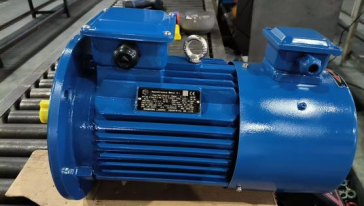
In terms of efficiency, modern IE3 energy efficiency class 3kW electric motors can achieve efficiencies of 85% to 89%, while IE4 ultra-high efficiency motors can even break the 90% mark. This means that during motor operation, only about 10% of the electrical energy is converted into heat and dissipated, with the majority of the energy effectively utilized for mechanical work. The starting torque multiple is typically between 2.0 and 2.6 times the rated torque, with a maximum torque multiple exceeding 2.8 times, easily handling load-bearing starts and momentary overload conditions.
From an electrical parameter perspective, under a 380V three-phase power supply, the rated current of a 3 kW motor is approximately 6.3 to 6.8 amps (depending on efficiency and power
under light load, which is one reason why it's necessary to avoid using an overpowered motor for a small load in practical applications.
Typical Application Areas
The application scope of 3kW electric motors is extremely broad. In manufacturing, they are widely used to drive small and medium-sized machine tools—lathe spindle motors, milling machine feed tables, drilling machine cutting drives, etc. On a small automated production line, several 3 kW motors are often distributed to drive conveyor belts, agitators, or small fans.
The agricultural sector also relies heavily on it. Feed grinders, water pumps, ventilation fans, milking equipment… a 3 kW motor perfectly meets the needs of a single piece of equipment in small and medium-sized farms and family farms, avoiding power waste while ensuring sufficient operational efficiency.
In residential and commercial settings, 3 kW motors are also very popular. They are used in escalator power units, small and medium-sized air compressors, high-pressure water pumps in car washes, and even compressors in some residential central air conditioning systems. In heating and ventilation systems, a 3 kW fan can provide reliable airflow to a space of hundreds of square meters.
Selection and Usage Considerations
When selecting a 3 kW electric motor, load characteristics must be considered comprehensively. For constant torque loads such as conveyor belts and extruders, 4-pole or 6-pole motors should be preferred to obtain better low-speed torque; while for square torque loads such as fans and water pumps, 2-pole or 4-pole motors can be selected according to actual operating conditions. For applications with high starting frequencies, motors with higher insulation classes (F or H class) should be selected, and appropriate overload protection devices should be provided.
In terms of installation methods, B3 (foot mounting), B5 (flange mounting), and B14 (small flange mounting) are the most common. In actual configurations, it's necessary to verify the interface dimensions between the motor and the equipment, especially whether the shaft extension diameter and center height meet the standards.
It's worth mentioning that with the development of frequency converter technology, more and more 3 kW motors are now used with frequency converters, achieving stepless speed regulation and energy-saving operation. Choosing a dedicated frequency converter motor can better address issues such as low-speed heat dissipation and bearing erosion, extending the equipment's lifespan.
Conclusion
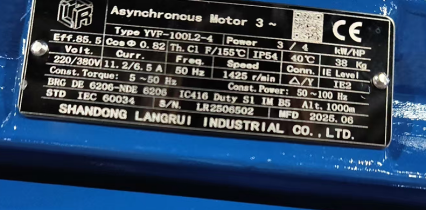
The reason why the 3 kW electric motor stands out among many power levels is precisely because it precisely meets the market demand of being "not too big, not too small, just enough." From industrial production to daily life, from traditional machinery to intelligent equipment, this seemingly ordinary motor has always been silently driving the operation of modern society behind the scenes. Understanding its performance boundaries and application patterns not only helps in rational selection and reducing energy consumption but also allows this classic power product to play a greater role in the new era.
Copyright © 2014-2026 Shandong Langrui Industrial Co., Ltd. All Rights Reserved | Sitemap | Powered by