
+86 533 2766 028
+86 533 2766 028
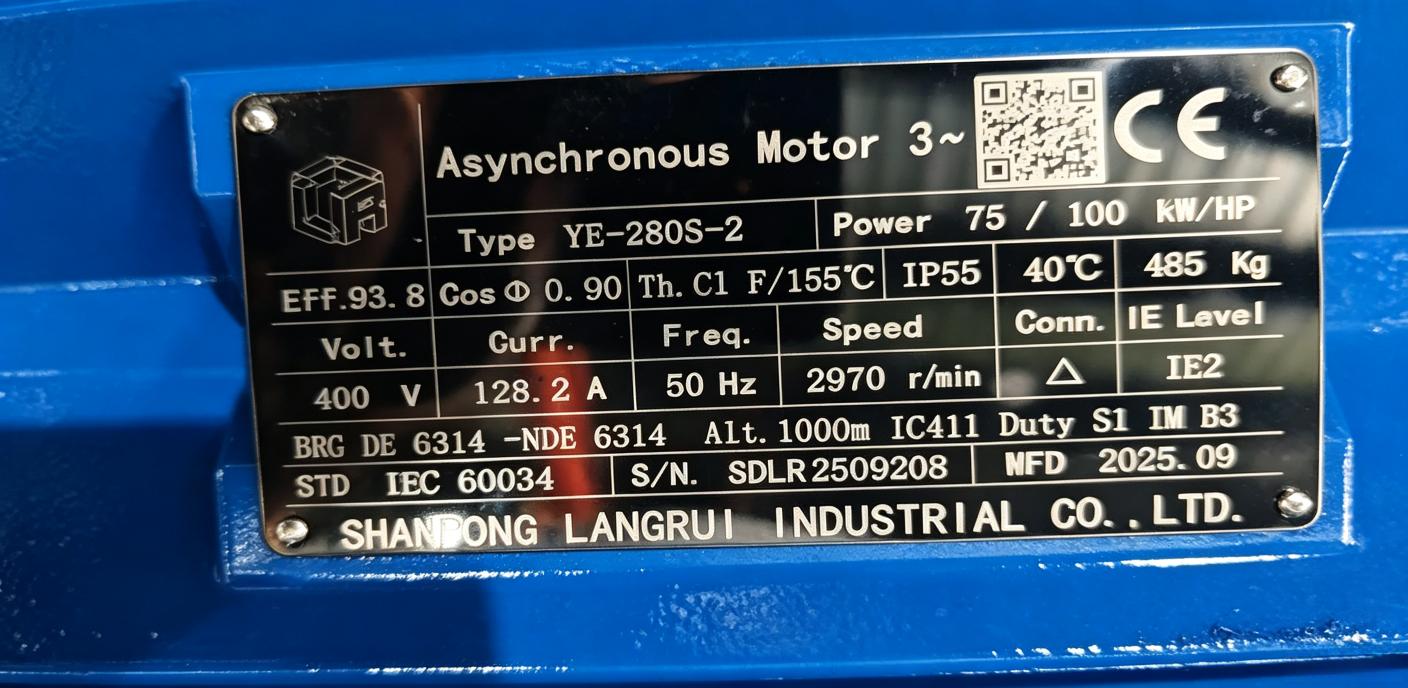
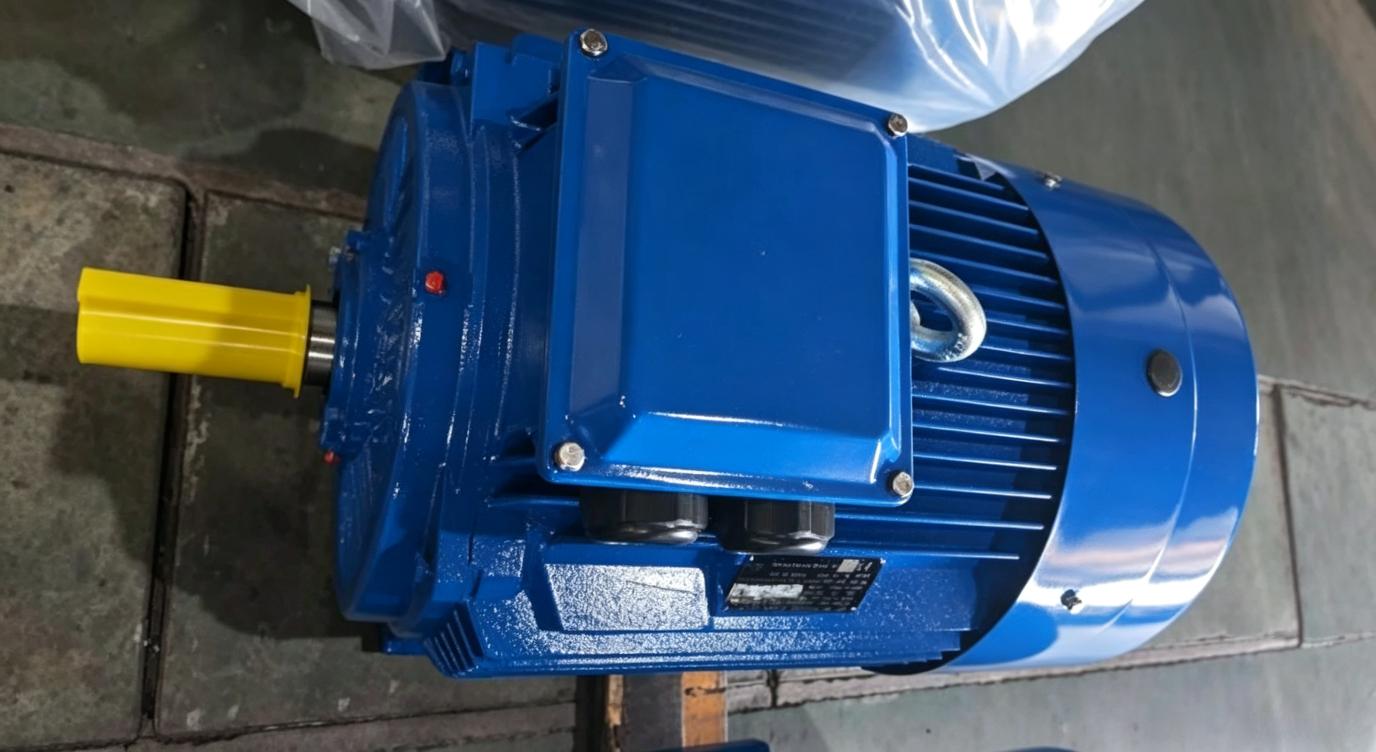
In the world of industrial power, YE3-280S-2/4/6 75 kilowatts (75 kW) electric motor is an awe-inspiring figure. Every rotation of a 75 kW electric motor consumes enough energy to power hundreds of energy-saving light bulbs and outputs enough torque to lift tons. It is the mainstay of heavy industrial tasks, driving those behemoths that truly change the form of matter—large fans, heavy-duty compressors, crushers, mixing mills, and various continuously operating heavy production lines.
The sheer size of a YE3-280S-2/4/6 75 kW electric motor is first and foremost reflected in its physical dimensions. Take a common 4-pole (1500 rpm , 50Hz) three phase asynchronous motor as an example. Its frame size is typically 250 or 280 (IEC standard), with a center height of 250 mm or 280 mm. The overall length is usually between 800 and 1000 mm, the height excluding shaft extension exceeds 600 mm, and the total weight is between 700 and 1000 kg—far beyond human handling, requiring forklifts or cranes for installation.
More importantly, the 75 kW power rating represents a significant threshold in electrical systems. In low-voltage (380V/690V) power supply systems, the rated current of a 75 kW electric motor is approximately 135 to 145 amps, still within the typical range for low-voltage motors. Once the power exceeds 90 to 100 kW, many users begin to consider medium-voltage power supplies (3kV, 6kV, 10kV) to reduce line losses and switching equipment costs. Therefore, 75 kW represents the most cost-effective upper limit for high-power low-voltage motors, making it the preferred power source for many heavy-duty equipment.
Typical Heavy-Duty Applications: Large fans and ventilation systems are traditional application areas for 75 kW ac motors. In thermal power plants, induced draft fans and forced draft fans need to overcome flue gas resistance and air preheater resistance to deliver combustion air into the boiler and extract flue gas for delivery to the desulfurization system. While the induced draft fan of a 300 MW unit may have a power output exceeding 2000 kW, auxiliary systems such as sealing fans and ignition fans extensively utilize 75 kW motors. Similarly, 75 kW is a common drive power in main ventilation fans in mines, jet fans in tunnels, and cooling tower fans in central air conditioning systems of large buildings.
Heavy-duty compressors are equally indispensable. A 75 kW screw air compressor can deliver 12 to 16 cubic meters per minute (0.8 MPa pressure), sufficient to power a medium-sized machining production line, a paint shop in an automobile manufacturing plant, or the entire pneumatic instrumentation system of a pharmaceutical factory. This power level is also widely used in interstage cooling fans for centrifugal compressors and circulating water systems for reciprocating compressors.
Crushing and grinding equipment is another major application area for 75 kW motors. In quarries and sand and gravel production lines, 75 kW 3 phase electric motors drive the flywheels of jaw crushers or impact crushers, breaking large rocks with diameters of hundreds of millimeters into gravel of tens of millimeters. During this process, the motor needs to withstand frequent and severe impact loads—when uncrushable materials (such as iron blocks) enter the crushing chamber, the current may surge instantaneously to 3 to 5 times the rated value, posing a severe test to the motor's overload capacity and rotor strength.
Agitation and mixing equipment also requires a powerful 75 kW motor. In chemical industry reactors, agitators need to overcome the viscous and flow resistance of materials. When producing high-viscosity polymers such as epoxy resins and polyesters, a 75 kW agitator motor may need to output torque exceeding 1500 N·m at low speeds (300 to 500 rpm), requiring the motor to be paired with a high-ratio reducer or a multi-pole low-speed motor (8-pole, 10-pole, or even 12-pole).
Selection and Matching Considerations
The starting method of a 75 kW 3 phase asynchronous electric motor must be carefully selected. Direct starting will generate an inrush current of approximately 800 to 1000 amperes, which will almost inevitably cause a voltage drop unless the transformer capacity is above 800 kVA and the power supply line is dedicated. Star-delta starting can reduce the starting current to 300-400 amps, but the torque also drops by 33%, making it suitable only for equipment starting under no-load or light-load conditions. Soft starters can smoothly increase the voltage from low to high, controlling the starting current to 2.5-3.5 times the rated value, without torque surges, making them the preferred starting solution for 75 kW motors. For applications with specific speed control requirements (such as fans and pumps), frequency converters are a one-stop solution—achieving both soft starting and speed adjustment according to load demands, resulting in overall energy savings of 20% to 50%.
Cooling and protection levels are equally important. A 75 kW 3 phase asynchronous electric motor generates considerable heat, with a power loss of approximately 3.5-4 kW (based on IE3 efficiency) during full-load operation. All of this heat is dissipated into the environment. Standard IC411 fan-cooled systems require sufficient ventilation space around the motor; in dusty environments (such as cement plants and feed mills), IP55 or IP65 protection ratings should be selected, and dust accumulation on the cooling fins should be cleaned regularly. The 75 kW motor represents a substantial leap forward in industrial drive. It no longer represents a compromise of "good enough," but rather a resolute commitment to "what else but me?" From crushing hard ores to transporting massive volumes of air, from mixing viscous chemical materials to powering large production lines, the 75 kW power output permeates the core processes of modern heavy industry. Choosing a 75 kW 3 phase asynchronous ac motor means dealing with hundreds of amperes of current, nearly a thousand Newton-meters of torque, and hundreds of thousands of yuan in electricity bills annually—but it is precisely because of these silently operating "strongmen" that metallurgy can smelt steel, cement can build skyscrapers, and chemicals can synthesize countless materials. Understanding the 75 kW motor is understanding the power essence of modern heavy industry.
Copyright © 2014-2026 Shandong Langrui Industrial Co., Ltd. All Rights Reserved | Sitemap | Powered by