
+86 533 2766 028
+86 533 2766 028
In industrial production, where heavy-load starting and speed regulation are critical, a special type of asynchronous motor is widely used. Thanks to its unique structural design, it effectively solves the problems of difficult starting and insufficient torque found in ordinary motors. This motor is the Slip Ring Induction Motor. Compared to squirrel-cage asynchronous motors, it has irreplaceable advantages in starting performance and speed regulation flexibility, making it one of the core power equipment in heavy industries such as mining, hoisting, and steel rolling.
To understand the advantages of Slip Ring Induction Motors, it's essential to first understand their core structural differences. It mainly consists of key components such as the stator, rotor, slip rings, and brushes. The rotor windings use a wound-rotor structure, with the end leads connected to three slip rings on the shaft, which are then connected to an external resistor via brushes—this is the most fundamental difference between it and the cast aluminum rotor structure of squirrel-cage motors. The core purpose of this structural design is to optimize the motor's starting and running performance by adjusting the external resistance and changing the impedance of the rotor circuit.
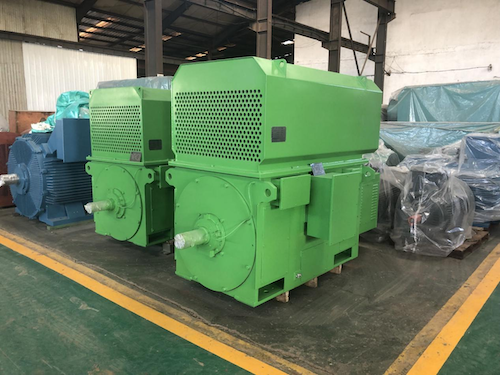
During startup, a conventional asynchronous motor can draw 5-8 times its rated current when started directly, impacting the power grid and potentially failing to power heavy-duty equipment due to insufficient starting torque. Slip Ring Motors, by connecting a suitable starting resistor in the rotor circuit, effectively limit the starting current while increasing starting torque, ensuring a smooth start. After startup, the external resistor can be removed, allowing the motor to enter normal operation. At this point, its operating efficiency is comparable to that of a squirrel-cage motor, balancing starting performance and operational economy.
Besides its excellent starting performance, the Slip Ring Motor's speed control function is also outstanding. By changing the resistance value of the rotor circuit, smooth speed regulation can be achieved, typically within 70%-100% of the rated speed, meeting the speed requirements under various operating conditions. However, it should be noted that resistance speed regulation incurs some energy loss, making it more suitable for short-term speed adjustments or scenarios with low speed accuracy requirements, such as cranes and conveyor belts.
The application scenarios for Slip Ring Induction Motors are mainly concentrated in heavy-duty, high-starting-torque industrial fields. In the mining industry, it is used in equipment such as hoists and crushers, easily handling the demands of heavy-load starts and frequent start-stop cycles. In the metallurgical industry, rolling mills, winches, and other equipment rely on it for smooth starts and speed regulation, ensuring continuous production. In the construction industry, tower cranes, construction elevators, and other equipment also depend on its power support. Furthermore, slip ring motors also play a valuable role in equipment requiring occasional speed adjustments, such as fans and water pumps.
Compared to other types of motors, slip ring motors also have their limitations. Due to their relatively complex rotor structure, including easily worn parts such as slip rings and brushes, daily maintenance costs are relatively high. Regular checks of brush wear and slip ring contact are necessary, with timely replacement of damaged parts to prevent poor contact from affecting motor operation. Simultaneously, their manufacturing cost is higher than that of ordinary squirrel-cage motors. Therefore, in light-load scenarios without speed regulation requirements, squirrel-cage motors remain a more economical choice.
In daily use, proper maintenance is key to extending the lifespan of slip ring motors. In addition to regularly inspecting the brushes and slip rings, it's crucial to keep the motor's internal components clean to prevent dust and oil from entering the rotor circuit and affecting contact performance. Simultaneously, the insulation condition of the rotor windings should be checked periodically to prevent short-circuit faults caused by insulation aging. Furthermore, during startup, ensure the external resistor is connected correctly to avoid excessive starting current or insufficient starting torque due to improper resistance.
In summary, slip ring induction motors hold a vital position in heavy-duty industrial applications due to their excellent starting performance and speed regulation flexibility. While they have drawbacks such as high maintenance costs and complex structure, their advantages under specific operating conditions are irreplaceable. Understanding their structure, performance, and application scenarios helps us select and use these motors more rationally, fully leveraging their core role in industrial production and providing reliable power guarantees for improved production efficiency.
Copyright © 2014-2026 Shandong Langrui Industrial Co., Ltd. All Rights Reserved | Sitemap | Powered by