
+86 533 2766 028
+86 533 2766 028
In industrial production, motors are core power equipment, and lubrication maintenance is crucial for their stable operation. Many maintenance personnel hold the misconception that "the more grease, the better the lubrication," neglecting the potential equipment malfunctions caused by over-grease. In a heavy industrial plant, a electric motor 75kw YE-280S-2 experienced a continuous high-temperature alarm due to over-grease application, nearly causing equipment damage and production interruption. This article, based on this case, analyzes the hazards and causes of over-grease application and summarizes the core points of motor lubrication maintenance.
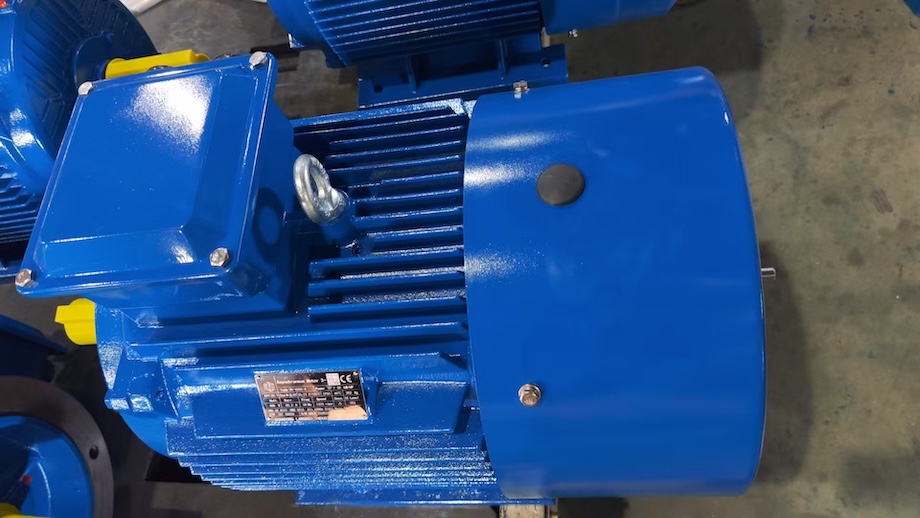
The incident occurred in the raw material conveying workshop of a large cement plant. A YE-280S-2 3 phase electric motor 75kW fan motor in this workshop was responsible for raw material ventilation and conveying. Its daily operating load was stable, and there were no previous obvious fault records. According to the equipment maintenance procedures, maintenance personnel replenished the grease to the motor bearings during the monthly maintenance. Due to a lack of understanding of lubrication standards, maintenance personnel injected approximately 200g of lithium-based grease into the bearing end cap's grease port based solely on experience (far exceeding the standard dosage). After maintenance, the motor was restarted, and initially, all parameters were normal. However, after two hours of operation, the motor bearing temperature continued to rise, from the normal 45°C to 78°C, triggering the equipment's high-temperature warning. The maintenance personnel immediately shut down the machine for troubleshooting.
To find the root cause of the fault, the maintenance team conducted a comprehensive inspection: First, they checked the 75kw electric motor's electrical parameters; the rated current was 138A, and the power factor was 0.89, both within the normal range, ruling out electrical system faults. Next, they inspected the fan impeller, finding no jamming or foreign object entanglement, confirming no abnormalities at the load end. Finally, they disassembled the motor bearing end cap and discovered that the bearing was filled with a large amount of uncompressed grease, with grease forming "oil blockages" between the balls and raceways. Some of the grease had carbonized due to the high temperature. Based on the maintenance records, the final determination was that the fault was caused by excessive grease injection, leading to abnormal bearing lubrication and subsequently high temperatures.
Why does excessive grease injection cause motor overheating? The core reason lies in the disruption of the lubricating grease's working characteristics. Under normal circumstances, when a motor bearing is running, a uniform grease film forms between the balls and raceways, serving to reduce friction and dissipate heat. Excess grease is thrown to the inner wall of the bearing cavity by the centrifugal force of the rotating bearing, without affecting the core lubrication area. However, when excessive grease is injected, the centrifugal force cannot completely expel the excess grease, causing it to accumulate inside the bearing and create significant running resistance. Simultaneously, the accumulated grease cannot dissipate heat in time, and under the frictional heat generated by the high-speed rotation of the bearing, the temperature continuously rises. This high temperature accelerates grease deterioration, leading to carbonization and clumping, further exacerbating frictional resistance, creating a vicious cycle of "high temperature - deterioration - even higher temperature," ultimately resulting in a sharp rise in the temperature at the motor bearing end.
After identifying the cause of the malfunction, the maintenance team immediately implemented corrective measures: disassembling the bearing end cover, thoroughly cleaning the internal deteriorated grease and carbonized impurities, and precisely injecting lithium-based grease compatible with the motor, according to the equipment manual's standard dosage (60g). After reassembly, a test run was conducted, and the 75kw electric motor bearing end temperature gradually stabilized at 42℃, restoring normal operation. Although this malfunction did not cause permanent damage to the equipment, it resulted in a 4-hour production interruption in the workshop, with direct economic losses of approximately 20,000 yuan, serving as a wake-up call for the company's motor maintenance work.
This case fully illustrates the principle that "more lubrication is not always better," and provides key insights for industrial three phase electric motor lubrication maintenance: First, strictly adhere to standard dosages. Different motor models have clearly defined specifications for the amount of grease injected into bearings. This must be precisely controlled according to the equipment manual, combined with parameters such as bearing model and speed, avoiding operation based on experience. Second, select the correct grease type. The appropriate grease type must be selected based on the motor's operating temperature, load characteristics, and environmental conditions; arbitrary substitution is prohibited. Third, standardize the grease injection process. Before grease injection, clean impurities from the grease inlet. After grease injection, conduct a short test run to observe temperature changes and ensure normal lubrication. Fourth, establish a regular inspection mechanism to periodically monitor parameters such as motor bearing temperature and vibration, and promptly identify any lubrication abnormalities.
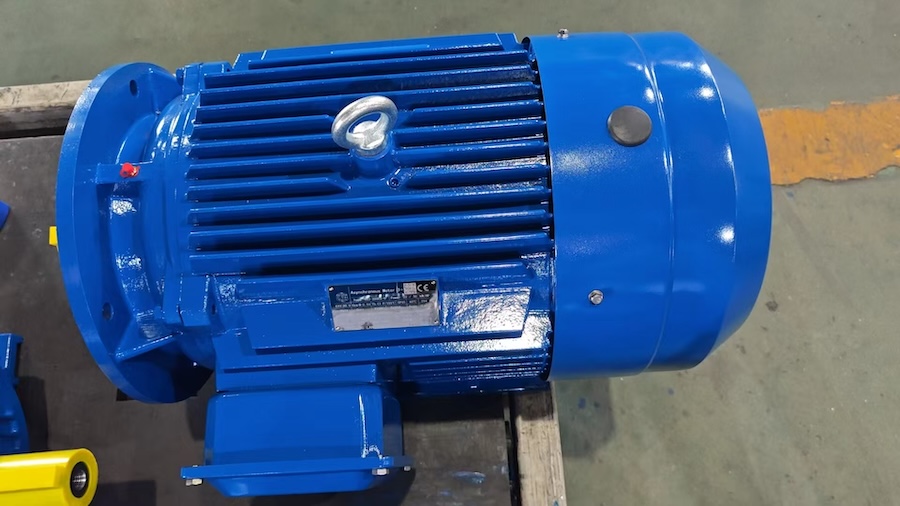
In summary, the core of 3 phase electric motor lubrication maintenance is "precise matching," not "the more the better." Excessive grease injection, seemingly "strengthening protection," actually disrupts the normal operation of equipment and causes malfunctions. Industrial enterprises need to abandon misconceptions, standardize lubrication maintenance procedures, and ensure stable motor operation in a scientific manner to effectively reduce equipment failure risks and improve production continuity and economic efficiency.
Copyright © 2014-2026 Shandong Langrui Industrial Co., Ltd. All Rights Reserved | Sitemap | Powered by