
+86 533 2766 028
+86 533 2766 028
In the field of industrial control, from the tool feed of precision machine tools to the tension control of paper rolls in papermaking machinery, and the smooth start and stop of elevators, stringent requirements are placed on the speed control accuracy and response speed of power systems. DC electric motors, with their unique structural design and control characteristics, can achieve smooth adjustment from low to high speeds, and their speed control accuracy can reach ±0.1%, far exceeding that of ordinary AC electric motors. Therefore, they are hailed as the "masters of precision speed control" in industrial equipment and have long held an important position in high-precision control scenarios.
The precise speed control capability of Direct current motors stems from their core technology principle of "armature control." Their structure mainly consists of a stator (which generates a fixed magnetic field) and a rotor (armature windings). When a DC current is applied to the armature windings, electromagnetic torque is generated under the action of the stator's magnetic field, driving the rotor to rotate. The key to speed control lies in "changing the armature voltage" or "adjusting the excitation current": A speed control system composed of power electronic devices such as thyristors and IGBTs can precisely adjust the voltage across the armature. Voltage and speed have a linear relationship—as the voltage increases, the speed increases smoothly; as the voltage decreases, the speed decreases synchronously, with no significant speed fluctuations throughout the process. For example, in precision grinding machines, DC electric motors can achieve continuous speed control within the range of 50-3000 r/min, and the speed change error is no more than 5 r/min for every 1V adjustment of the armature voltage, fully meeting the precision machining requirements of grinding machines for different workpieces. Furthermore, by adjusting the current in the excitation winding to change the magnetic field strength, "field weakening speed increase" can be achieved, further expanding the speed control range. The speed ratio (the ratio of the highest speed to the lowest speed) of some DC motors can reach 1:1000, adapting to ultra-wide operating conditions.
Compared to Ac induction motor, DC motors have three core advantages in precise speed control scenarios. Firstly, it offers excellent speed regulation smoothness: Without relying on frequency subdivision using inverter technology, stepless speed regulation can be achieved through continuous voltage adjustment. It maintains stable torque even at low speeds, avoiding the "creeping" phenomenon of AC electric motors at low speeds. This characteristic makes it an ideal power source for yarn traction in textile machinery—during spinning, the speed needs to be gradually increased from 100 r/min to 1500 r/min, and the DC motor can maintain uniform yarn tension throughout, reducing the breakage rate. Secondly, it offers rapid dynamic response: With low armature winding inductance, the speed can respond within 0.01-0.1 seconds after voltage adjustment, making it suitable for scenarios with frequent starts and stops and rapid speed changes, such as elevator operation. From acceleration to smooth operation and deceleration to stopping, the DC motor can precisely match the speed curve, significantly reducing discomfort during elevator starts and stops. Thirdly, it offers high control precision: When combined with speed feedback devices (such as tachogenerators and encoders) to form a closed-loop control system, it can correct speed deviations in real time, controlling speed fluctuations within ±0.05%. Within this range, in the tool feed system of CNC machine tools, the error in feed per millimeter can be ensured to be no more than 0.001mm, guaranteeing the dimensional accuracy of machined parts.
The precise speed regulation capability of DC motors has deeply empowered core equipment in multiple industrial sectors. In the metal processing industry, the spindle drive of CNC lathes uses DC motors, which can precisely adjust the speed from 500 to 2000 r/min according to different materials being processed (such as steel, aluminum, and plastic), achieving efficient switching between cutting and surface polishing. In the printing industry, roll-to-roll printing presses need to maintain complete synchronization between the paper feed speed and the printing cylinder speed. Direct current motors compensate for changes in paper tension through real-time speed regulation, avoiding registration deviations and controlling the alignment accuracy of printed patterns within 0.1mm. In the medical equipment field, the gradient coil drive system of MRI scanners relies on the precise speed regulation of DC motors to ensure the stability of magnetic field gradient changes and improve imaging clarity. Even in the new energy field, DC motors, with their speed regulation advantages, are applied to the auxiliary systems of electric vehicles (such as steering and braking) to ensure driving safety.
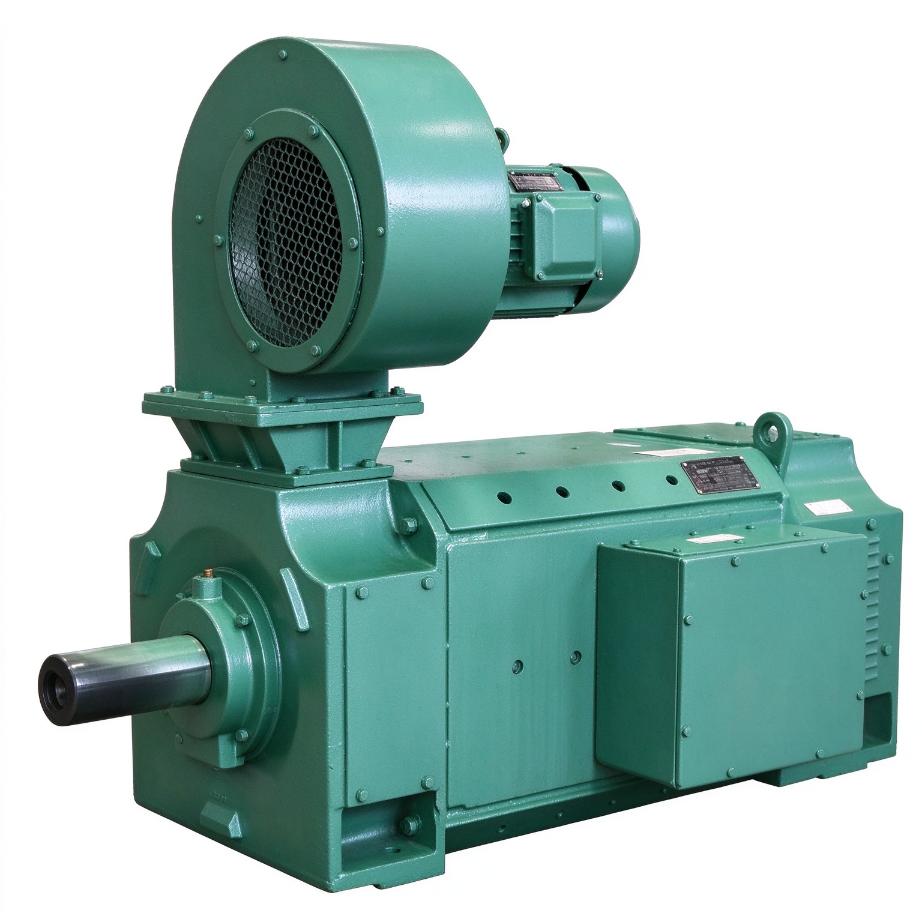
With the upgrading of power electronics technology and control algorithms, DC motors are also transforming towards "high efficiency, miniaturization, and intelligence." New permanent magnet DC motors eliminate the excitation winding, increasing efficiency to over 90% and reducing size by 25% compared to traditional Direct current motors. Intelligent DC speed control systems integrate PLC and IoT technologies, enabling remote monitoring of motor speed, temperature, load, and other parameters, automatically optimizing speed curves, and reducing energy consumption. Although AC frequency conversion technology is developing rapidly, DC motors still possess irreplaceable advantages in scenarios requiring extremely high speed control accuracy and dynamic response. In the future, with the deepening of Industry 4.0, DC motors of China electric motors will continue to serve as "masters of precision speed control," providing stable and reliable power support for precision manufacturing, intelligent equipment, and other fields, driving industrial control towards higher precision and higher efficiency.
Previous: None
Copyright © 2014-2026 Shandong Langrui Industrial Co., Ltd. All Rights Reserved | Sitemap | Powered by